
Nitrous Oxide
in Breath Analysis
Although present in very small amounts, Nitrous Oxide (N₂O) can be detected in exhaled breath — a capability that opens the door to various applications in medicine, toxicology, and breath-based diagnostics.
What is N2O ?
Nitrous Oxide (N2O), also known as “laughing gas”, is a colorless and non-flammable gas with a slightly sweet smell. It is widely used across multiple sectors:
Medical: as an anesthetic and analgesic (especially in dentistry and emergency care),
Food industry: as a propellant in whipped cream cartridges,
Industrial: in engine performance enhancement (motorsports).
However, in recent years, N₂O has gained notoriety due to its increasing misuse as a recreational drug, particularly among young people. When inhaled in large amounts, it induces brief euphoria — but also comes with serious risks: neurological damage, loss of motor control, and increased accident risk when used before driving.
SCIENCE
N2O monitoring in breath using NDIR sensor
Nitrous oxide is detected at low concentrations in human breath. Studies have examined its use as a physiological indicator, showing variations in concentration after food ingestion. This substance can be measured in exhaled air analysis for medical purposes, as an indicator during anesthesia or as a biomarker for asthma and chronic obstructive pulmonary disease.
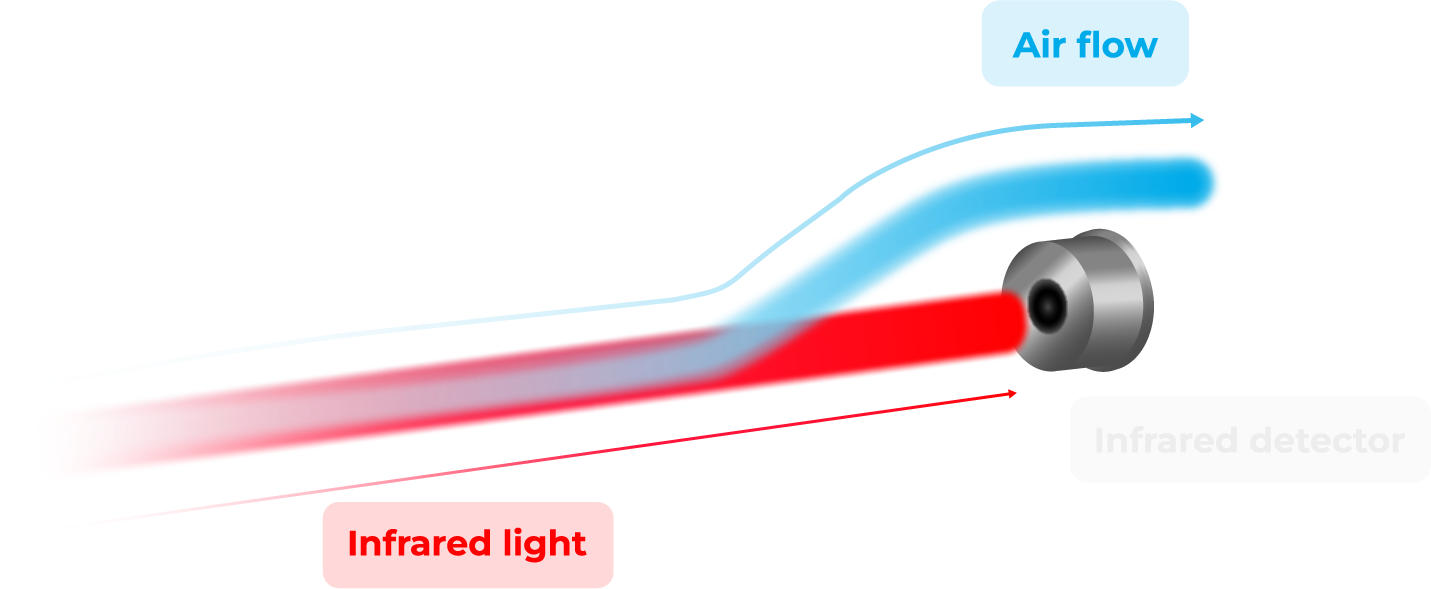
NDIR (non-dispersive infrared) is a gas detection technology that measures the concentration of a specific gas, such as N2O, by detecting its absorption of infrared radiation. In N2O monitoring, exhaled air is directed towards the NDIR sensor, which emits infrared radiation at a specific wavelength. The N2O molecules present in the exhaled air absorb this radiation, and the sensor calculates the concentration on the basis of the absorbed infrared radiation. NDIR sensors are preferred for N2O monitoring because of their accuracy, reliability, ability to detect low concentrations, minimal maintenance and resistance to variations in temperature, pressure and humidity.
The importance of monitoring N2O in exhaled air
Nitrous oxide (N₂O) is occasionally detected in trace amounts in exhaled human breath. While its endogenous origin remains under investigation, some exploratory research has suggested that physiological conditions — such as digestion or metabolism — could influence its presence. These findings open the door to further study on N₂O as a potential indicator in breath analysis.
In the medical field, N₂O is widely used as an anaesthetic agent. Its detection in exhaled air reflects real-time absorption and elimination, offering opportunities for non-invasive monitoring. While not currently a validated biomarker for specific respiratory diseases, its presence in breath is being explored in research on breath-based diagnostics.
Prevent risks of misuse
Recreational inhalation of “laughing gas” is increasingly popular, particularly among young people seeking short-term euphoric effects. But repeated or excessive use of N₂O carries serious health and safety risks:
It can displace oxygen in the lungs, leading to hypoxia, which may cause dizziness, nausea, headaches, loss of consciousness, or even death.
Chronic use may result in neurological damage, including memory loss, muscle weakness, poor coordination, and numbness — often related to vitamin B12 inactivation.
Organ toxicity has also been reported in cases of heavy use, affecting the liver and kidneys.
Sensorimotor impairment increases the risk of accidents (falls, burns, road incidents).
In some countries, thousands of traffic incidents each year are linked to N₂O misuse behind the wheel.
Measuring N₂O in exhaled air offers a direct and non-invasive way to assess recent exposure. This can be highly valuable in both public health and road safety contexts.
Measuring the concentration of N2O in the exhaled air after inhalation could reflect the amount of gas that has been absorbed by the lungs and could be an indicator of exposure to this substance.
A key indicator during anaesthesia
Nitrous oxide is commonly used as part of gas-based anaesthesia. Because it is not significantly metabolized by the body and is eliminated via the lungs, exhaled breath analysis can provide a reliable, real-time indicator of the gas’s concentration in the patient.
Monitoring N₂O in exhaled air allows healthcare providers to:
Ensure proper anaesthetic dosage throughout a procedure
Avoid under-sedation (which may result in patient awareness or discomfort)
Prevent oversedation and related respiratory complications
Improve patient safety through continuous, non-invasive monitoring
Real-time breath monitoring is therefore becoming a valuable tool in modern anaesthesia protocols — improving both precision and peace of mind.
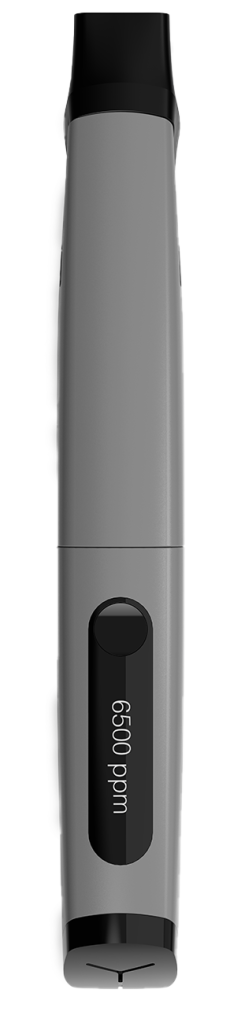
OCIN2O
The first laughing gas breathalyzer
Discover the first exhaled air analyzer dedicated to the analysis of nitrous oxide in breath!
- Real-time measurement of N2O concentration in breath
- Highly precise and reliable
- Easy to use and transportable
PRODUCT
OCISense Sensor to monitor N2O in exhaled air
Olythe is specialized in the production of NDIR sensors for gas sensing, including Nitrous Oxide. We offer custom solutions, helping companies to define their needs ans requirements for N2O monitoring. Thanks to our expertise in gas sensing and our understanding of the specific challenges associated with N2O measurements in exhaled air, we can provide you custom advice and support.
Our infrared spectroscopy sensor can be integrated into portable and mobile systems with high accuracy and reliability.
