

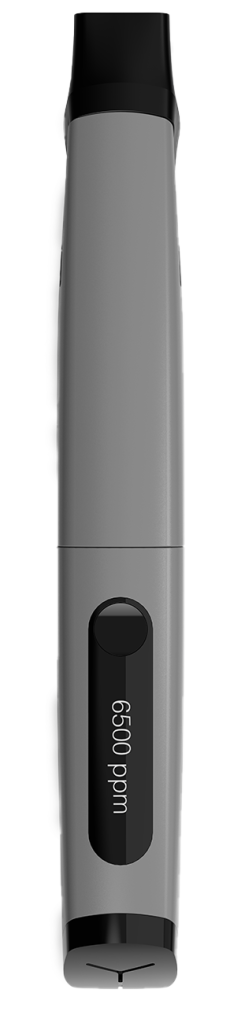




OCIN2O

The first nitrous oxide breathalyzer

Discover the first exhaled air analyzer dedicated to the analysis of laughing gas in breath!

An effective preventive solution against the risks related to excessive laughing gas consumption.

Faced with the growing nitrous oxide (N2O) consumption, particularly among young people, we have developed a proactive and innovative response. OCIN2O is an exhaled air analyzer dedicated to the precise measurement of N2O, offering a new approach to countering the risks associated with consumption.

Designed for prevention professionals, clinical cases and law enforcements, the OCIN2O is an essential tool in the accurate monitoring of N2O. Thanks to its sensor based on infrared spectroscopy technology, this revolutionary device enables regulators and health professionals to proactively tackle this growing problem.

OCIN2O goes beyond simple measurement, offering immediate and reliable analysis of N2O concentration in exhaled air. Portable and user-friendly, it is an essential tool in managing the risks related to nitrous oxide consumption, providing a complete solution for preventing the consequences of recreational use of laughing gas. As an indispensable partner, OCIN2O also provides essential information for medical breath analysis.

Measure N2O level instantly with the OCIN2O electronic breathalyzer
OCIN2O SIDEVIEW DARKSHADOW.2104

In the workplace

In the professionnal field, our analyzer is essential for ensuring employee safety, particularly in high-risk areas where the use of narcotics or other noxioussubstances is strictly prohibited. Thanks to precise monitoring of N2O concentrations in exhaled air, it ensures proactive detection, helping to maintain safe working environments.

For Law Enforcement officers

For law enforcement, our analyzer is an indispensable asset for detecting and monitoring N2O levels during law enforcement operations. Its enhanced portability enables use in the field, helping to reinforce safety protocols and minimize the potential risks associated with prolonged exposure.

In the health sector

In the health field, it is proving to be an essential companion for healthcare professionals, offering real-time monitoring of laughing gas concentrations during medical procedures. Its intuitive interface and advanced features make it the tool of choice for ensuring patient safety.

Technical specifications


Model : OCIN2O

Technology : Patented Infrared Spectrometry
Compliance : CE
Measuring range : 0 to 1 000 ppm

Calibration : 18 months
Power supply : Micro USB (Type B)
Battery type : 860 mAh (Lithium battery)
Dimensions : 25 × 25 × 185 mm
Weight : 60g
TECHNO

N₂O monitoring

in breath using NDIR sensor

  
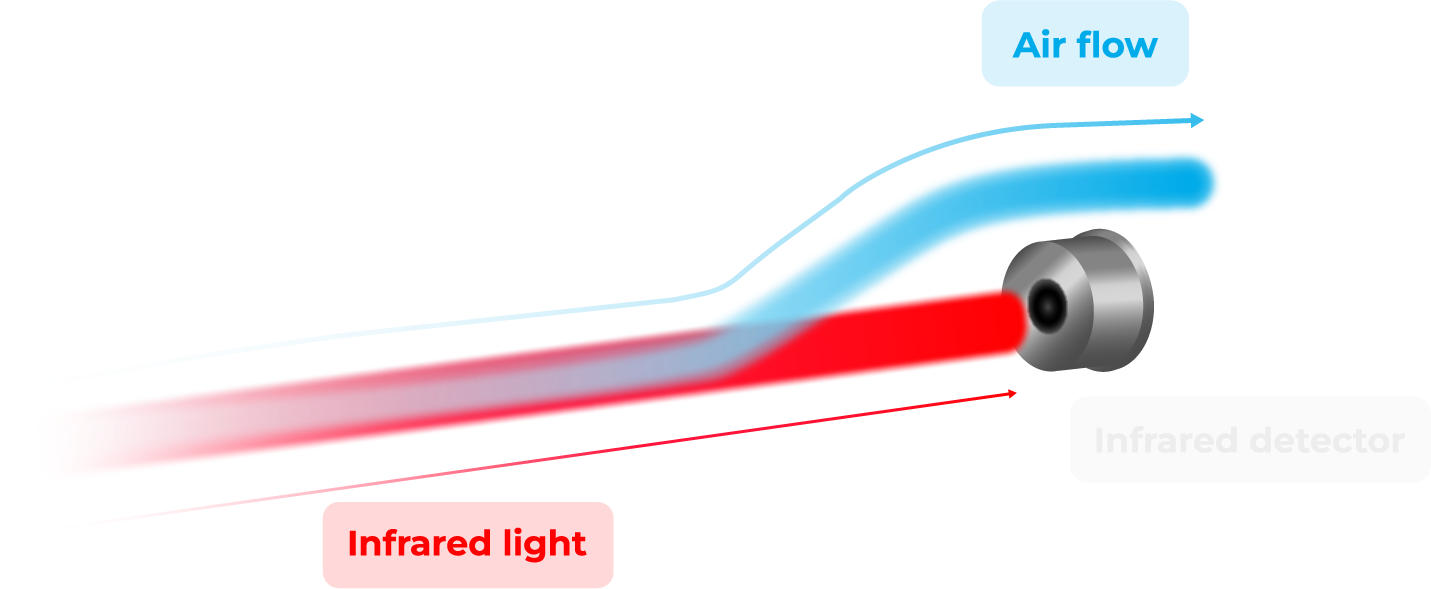
NDIR (non-dispersive infrared) is a gas detection technology that measures the concentration of a specific gas, such as N2O, by detecting its absorption of infrared radiation. In N2O monitoring, exhaled air is directed towards the NDIR sensor, which emits infrared radiation at a specific wavelength. The N2O molecules present in the exhaled air absorb this radiation, and the sensor calculates the concentration on the basis of the absorbed infrared radiation. NDIR sensors are preferred for N2O monitoring because of their accuracy, reliability, ability to detect low concentrations, minimal maintenance and resistance to variations in temperature, pressure and humidity.

ociengine_ndir_gas_sensor

SCIENCE

N₂O monitoring in breath after inhalation of a cartridge


When inhaled, N₂O rapidly diffuses across the alveolar membrane and enters the bloodstream. Because it is not significantly metabolized by the body, the gas is eliminated primarily via exhalation. As a result, the concentration of N₂O in the breath after inhalation reflects both the recent exposure and the ongoing clearance by the lungs.


Using high-resolution infrared spectroscopy, the OCIN₂O device is capable of detecting N₂O in exhaled breath with high sensitivity and precision — even at low ppm levels.

Real-world tests conducted in controlled settings demonstrate that:

  • N₂O can be detected in breath up to 300 minutes after inhalation

  • The breath curve shows a gradual decay, not an immediate disappearance

  • Inter-individual variability exists, but detection remains robust across subjects

👉 The graph below illustrates N₂O concentration in exhaled breath following inhalation of one cartridge. Data were recorded at regular intervals using the OCIN₂O analyser.

More information about OCIN2O?